

ISO 14001 Lead Auditor Training: Developing Expertise in Environmental Management Auditing
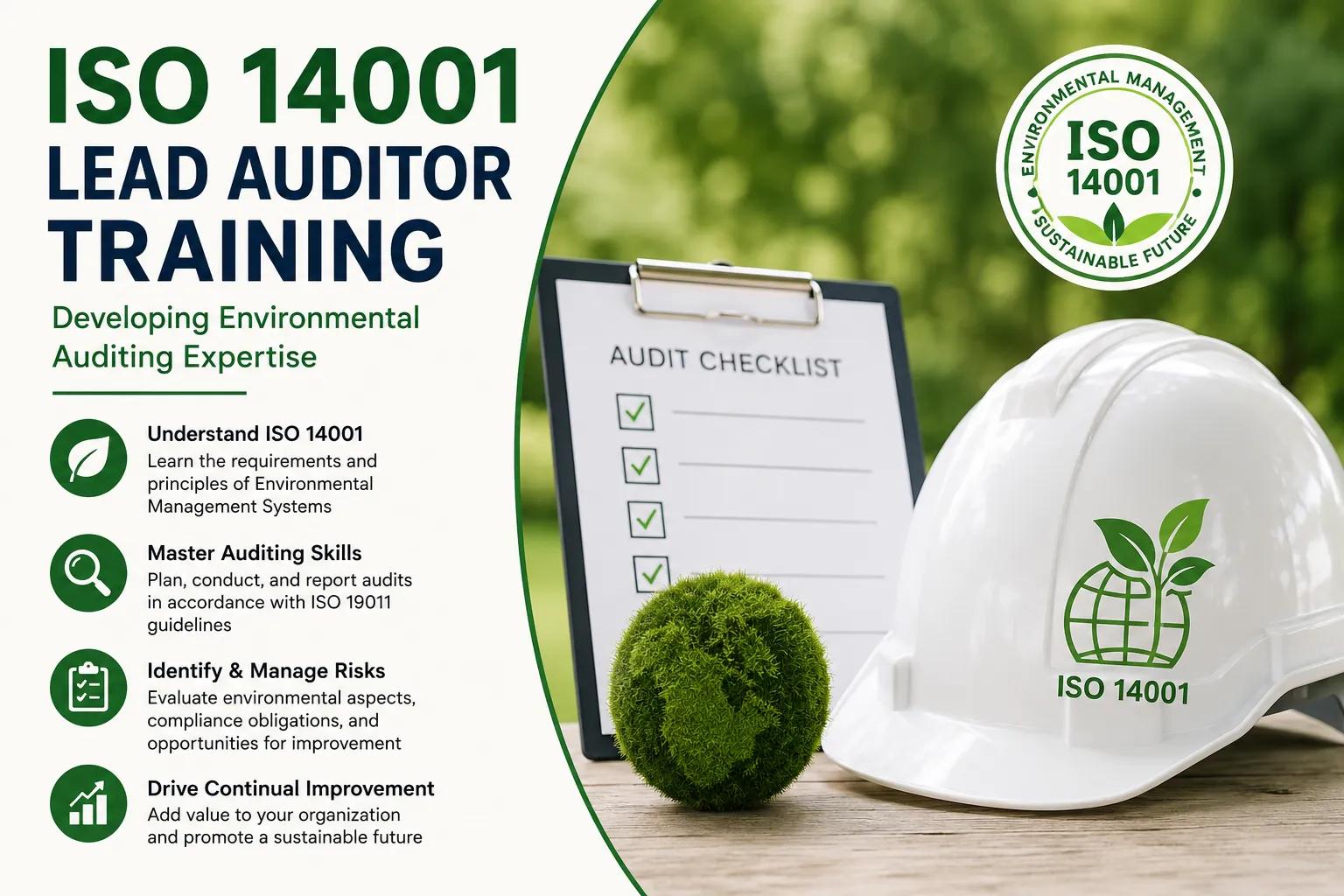
ISO 14001 Lead Auditor Training: Developing Expertise in Environmental Management Auditing
Introduction
Environmental sustainability has become a key priority for organizations worldwide. Governments, customers, investors, and stakeholders increasingly expect businesses to minimize their environmental footprint and comply with environmental regulations. To meet these expectations, many organizations implement an Environmental Management System (EMS) based on ISO 14001. However, maintaining an effective EMS requires competent professionals who can evaluate its performance and identify opportunities for improvement. ISO 14001 Lead Auditor Training is specifically designed to develop these auditing skills and enable professionals to conduct environmental management system audits with confidence and competence.
This training course provides participants with a thorough understanding of environmental management principles, ISO 14001 requirements, and internationally accepted auditing practices. It equips learners with the knowledge needed to lead audit teams, assess compliance, and contribute to continual environmental improvement.
What is ISO 14001 Lead Auditor Training?
ISO 14001 Lead Auditor Training is a professional qualification program that teaches participants how to audit Environmental Management Systems against the requirements of ISO 14001. The course combines theoretical knowledge with practical exercises to ensure participants understand both the standard and the auditing process.
The training focuses on the structure and requirements of ISO 14001, including environmental policy development, planning, implementation, performance evaluation, and improvement activities. Participants learn how organizations can identify environmental aspects, assess risks and opportunities, establish environmental objectives, and monitor their environmental performance.
In addition, the course introduces auditing principles based on ISO 19011 guidelines and the requirements of management system certification audits. By the end of the program, participants are capable of planning, conducting, managing, and reporting an EMS audit effectively.
Why ISO 14001 Lead Auditor Training is Important
Organizations face increasing pressure to demonstrate responsible environmental practices. Failure to comply with environmental regulations can result in financial penalties, reputational damage, and operational disruptions. ISO 14001 Lead Auditor Training helps organizations strengthen their environmental management practices by ensuring they have qualified professionals capable of evaluating system effectiveness.
Lead auditors play a crucial role in identifying weaknesses within the EMS and recommending corrective actions. Their findings help management make informed decisions, improve resource utilization, reduce waste generation, and minimize environmental impacts.
For professionals, the training provides internationally recognized auditing skills that enhance career development. Qualified lead auditors are highly sought after in industries such as manufacturing, construction, energy, transportation, pharmaceuticals, and consulting.
Key Topics Covered in ISO 14001 Lead Auditor Training
An ISO 14001 Lead Auditor course covers a broad range of topics to prepare participants for real-world auditing situations. Some of the major subjects include:
Understanding ISO 14001 Requirements
Participants learn the purpose and structure of ISO 14001 and gain a detailed understanding of its clauses, including organizational context, leadership responsibilities, planning, support functions, operations, performance evaluation, and continual improvement.
Environmental Aspects and Impacts
The course explains how organizations can identify activities that affect the environment and evaluate their significance. Participants learn methods for controlling environmental impacts and establishing effective operational controls.
Legal and Regulatory Compliance
Environmental legislation varies across countries and industries. The training helps participants understand how organizations can identify applicable legal requirements, maintain compliance obligations, and monitor regulatory changes.
Risk-Based Thinking
ISO 14001 emphasizes the importance of addressing risks and opportunities. Participants learn techniques for assessing environmental risks, prioritizing actions, and implementing measures to mitigate negative impacts.
Audit Planning and Preparation
Effective audits require careful preparation. Participants are taught how to define audit objectives, determine audit scope, develop audit plans, and prepare working documents and checklists.
Conducting the Audit
The training provides guidance on interviewing personnel, observing activities, reviewing documents, and collecting objective evidence. Participants also learn how to evaluate audit findings against ISO 14001 requirements.
Reporting and Corrective Actions
Lead auditors must communicate audit results clearly and professionally. The course explains how to write nonconformity reports, present audit conclusions, and verify the effectiveness of corrective actions.
Benefits of ISO 14001 Lead Auditor Training
Completing ISO 14001 Lead Auditor Training offers numerous advantages for both organizations and individuals.
For organizations, having qualified lead auditors contributes to improved environmental performance, better compliance management, and increased confidence among stakeholders. Internal assessments conducted by competent auditors can uncover inefficiencies, reduce resource consumption, and support sustainability initiatives.
For professionals, the training enhances auditing capabilities and opens doors to new career opportunities. Lead auditors are employed by certification bodies, consulting firms, multinational corporations, and government agencies. The qualification also demonstrates a commitment to environmental responsibility and professional growth.
Another significant benefit is the ability to support organizations in achieving and maintaining ISO 14001 certification. Effective audits ensure that environmental management systems remain relevant, compliant, and aligned with organizational objectives.
Who Should Attend ISO 14001 Lead Auditor Training?
This training program is suitable for a wide range of professionals, including:
Environmental managers and coordinators
Internal auditors
Compliance officers
Sustainability specialists
Health, safety, and environment professionals
Consultants involved in EMS implementation
Individuals seeking to become third-party certification auditors
Managers responsible for environmental performance and regulatory compliance
Previous auditing experience is beneficial but not always mandatory. Many training providers offer courses that accommodate participants with varying levels of knowledge and experience.
Conclusion
ISO 14001 Lead Auditor Training is a valuable investment for professionals and organizations striving to achieve excellence in environmental management. The course develops advanced auditing skills, enhances understanding of ISO 14001 requirements, and enables participants to assess Environmental Management Systems effectively. By training competent lead auditors, organizations can improve compliance, reduce environmental risks, optimize resource usage, and demonstrate their commitment to sustainability. As environmental expectations continue to rise globally, ISO 14001 Lead Auditor Training remains an essential step toward building a greener, more responsible future.